HeSi Metal Wire Mesh Products Co., Ltd.
Welded wire mesh is widely used in construction, agriculture, fencing, industrial filtration, and infrastructure reinforcement. One of the most common concerns buyers have is: does welded wire mesh rust?
The short answer is: yes, it can rust—but whether it rusts quickly or lasts for decades depends entirely on the material, coating type, and environment.
This article takes a deeper engineering and materials-science perspective to explain why rust happens, how fast it develops, and how different types of welded wire mesh perform in real environments.
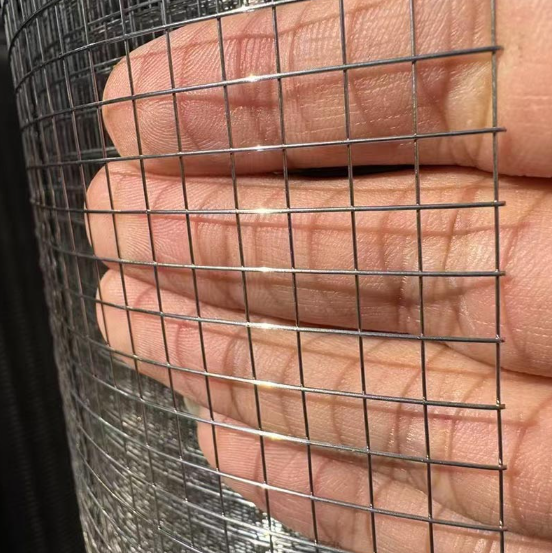
1. Why Welded Wire Mesh Rusts (Scientific Explanation)
Rust is a form of iron oxide (Fe₂O₃) created when steel reacts with:
- Oxygen (O₂)
- Moisture (H₂O)
- Electrolytes (salt, acid, pollution)
The corrosion reaction accelerates in the presence of:
- Humidity > 60%
- Salt spray (coastal areas)
- Industrial pollutants (SO₂, NOx)
- Damaged coating or exposed steel surface
Key point:
Most welded wire mesh is made from low-carbon steel wire, which is inherently prone to oxidation unless protected.
2. Rust Resistance Depends on Material Type (Core Comparison)
Different welded wire mesh types behave very differently in corrosion resistance.
2.1 Plain Carbon Steel Welded Wire Mesh (Uncoated)
- Material: Q195 / low carbon steel
- Surface: no coating
- Corrosion resistance: very low
Performance data (lab exposure test, ASTM B117 salt spray):
- First rust spots: 8–24 hours
- Visible corrosion: 3–7 days
- Severe degradation: < 1 month in humid environment
Conclusion: Only suitable for temporary use or indoor dry environments
2.2 Galvanized Welded Wire Mesh (Most Common)
Galvanization provides a zinc coating that acts as a sacrificial layer.
A. Electro-Galvanized Mesh
- Zinc coating: 5–15 g/m²
- Surface: smooth, thin layer
Corrosion resistance:
- Rust appearance: 6 months – 2 years (outdoor)
- Coastal environment: 3–6 months
Pros: low cost, smooth surface
Cons: thin coating, limited lifespan
B. Hot-Dip Galvanized Mesh (HDG)
- Zinc coating: 40–300 g/m²
- Strong metallurgical bond
Corrosion test results:
- Rural environment: 10–20 years lifespan
- Urban industrial environment: 5–10 years
- Coastal salt spray: 3–8 years
Key insight: Every 100 g/m² increase in zinc coating can extend corrosion resistance by 2–3 years in moderate climates
2.3 Stainless Steel Welded Wire Mesh (304 / 316)
This is the highest corrosion-resistant option.
304 Stainless Steel:
- Chromium: ~18%
- Nickel: ~8%
316 Stainless Steel:
- Includes molybdenum (Mo 2–3%) for chloride resistance
Performance comparison:
- Fresh water environment: 20–40 years
- Coastal marine environment:
- 304: 5–15 years
- 316: 15–30+ years
Key insight:
316 stainless steel improves pitting corrosion resistance by up to 3× compared to 304 in salt environments
2.4 PVC / PE Coated Welded Wire Mesh
- Base: galvanized wire
- Coating: PVC or PE plastic layer (0.3–1.0 mm)
Corrosion resistance:
- Indoor: 15–25 years
- Outdoor: 10–20 years
- Coastal: 8–15 years
Important:
Even if coating is damaged, zinc layer still provides secondary protection.
3. Real Environmental Corrosion Comparison (Data Table)
| Environment |
Bare Steel |
Electro-Galvanized |
Hot-Dip Galvanized |
304 SS |
316 SS |
|---|
| Dry indoor |
1–3 years |
5–8 years |
10–15 years |
25+ yrs |
30+ yrs |
| Urban outdoor |
<1 year |
2–5 years |
5–10 years |
20 yrs |
25+ yrs |
| Coastal area |
weeks |
<1 year |
3–8 years |
5–15 yrs |
15–30 yrs |
| Industrial pollution |
months |
1–3 years |
3–7 years |
10–20 yrs |
15–25 yrs |
4. Why Welded Points Rust Faster Than the Wire Body
A critical technical issue often ignored:
During welding, the high temperature:
- Burns off zinc coating (if pre-galvanized)
- Changes microstructure at weld points
- Leaves micro-exposed steel zones
Corrosion behavior:
- Weld joints rust 2–5× faster than wire body in unprotected mesh
Solution methods:
- Post-galvanizing after welding (best protection)
- Zinc-rich paint on weld points
- Using stainless steel welding wire
5. How to Prevent Rust in Welded Wire Mesh Applications
From an engineering perspective, rust prevention depends on three layers of protection:
5.1 Material selection (most important)
- Indoor use → electro-galvanized
- Outdoor general → hot-dip galvanized
- Coastal/chemical → 316 stainless steel
5.2 Coating thickness control
Typical zinc coating vs lifespan relationship:
- 40 g/m² → ~3–5 years
- 80 g/m² → ~5–8 years
- 120 g/m² → ~8–12 years
- 200 g/m² → 15+ years
5.3 Environmental isolation
- Avoid standing water contact
- Reduce soil moisture exposure
- Use concrete base isolation for fencing
6. Engineering Insight: When Rust Is “Acceptable”
Not all rust is catastrophic.
- Surface rust (first stage): cosmetic, minimal structural loss
- Deep corrosion (pitting): structural failure risk
- Weld joint corrosion: highest failure risk point
In structural engineering:
- Up to 10% surface rust area may still be acceptable in non-load-critical fencing
- Any pitting >0.5 mm depth is considered structural risk
7. Conclusion: Does Welded Wire Mesh Rust?
Yes—but the real answer is:
Welded wire mesh does not simply “rust or not rust.” It degrades according to material grade, coating thickness, welding protection, and environmental exposure.
Key takeaways:
- Bare steel rusts within days to months
- Hot-dip galvanized mesh can last up to 10–20 years
- Stainless steel (316) can exceed 30 years in harsh environments
- Weld joints are the most vulnerable corrosion points
About HeSi Metal Wire Mesh Products Co., Ltd.
HeSi Metal Wire Mesh Products Co., Ltd. specializes in manufacturing high-quality welded wire mesh products, including galvanized mesh, stainless steel mesh, PVC-coated mesh, and customized industrial wire mesh solutions. We focus on durability engineering, corrosion resistance optimization, and OEM/ODM production for global construction, agriculture, and industrial applications.

